
There’s something quietly persuasive about warmth. A hot towel over the shoulders, stones that hold heat like quiet embers, steam rising from a basin — these small, hot rituals change how our bodies receive touch. In Japan, massage techniques that pair pressure and warmth are centuries old and still evolving. Whether you’re drawn to shiatsu, curious about hot-stone adaptations, or simply want to bring a touch of Japanese heat therapy into your home routine, this article guides you through what “Japanese massage hot” can mean, how it works, and how to enjoy it safely and effectively.
What “Japanese Massage Hot” Refers To
The phrase “Japanese massage hot” covers a range of practices that combine traditional Japanese bodywork with heat. At one end is shiatsu — rooted in Japanese adaptations of acupressure — where practitioners may use warmed hands or towels to soothe muscles before applying pressure. At the other end are explicit heat therapies: moxibustion (okyu), onsen bathing, ganban’yoku (stone-slab therapy), and hot-stone massages adapted to Japanese sensibilities. These practices share the same goal: use heat to prepare tissue, deepen relaxation, and complement manual techniques.
Key styles and their relationship to heat
Japanese bodywork includes several recognizable forms. Shiatsu applies pressure along meridians to balance energy and relieve tension; anma is a classical Japanese massage with kneading and rubbing; moxibustion uses the herb mugwort to deliver focused heat to acupuncture points. Hot-stone and heated-compress variations borrow from global spa traditions but are often tailored to local preferences: gentler pressure, shorter heating intervals, and an emphasis on subtle, calming environments.
Why Heat Helps: The Physiology in Plain Language
Heat isn’t just pleasant — it changes tissue behavior. Warmth increases local blood flow, which delivers oxygen and removes metabolic byproducts that build up during stress or injury. Heat makes connective tissue more pliable, so muscles and fascia yield more readily to pressure. In short sessions, heat can reduce the sensory signals that tell the brain there’s pain, creating a window where a therapist’s touch becomes more effective.
Practical benefits people report
- Faster relaxation and a sense of immediate relief in stiff shoulders or the lower back
- Deeper release during massage, allowing for less forceful manipulation
- Improved range of motion after sessions that combine heat and hands-on work
- Calming of the nervous system — warmth signals safety to the brain
What to Expect in a Japanese-Style Hot Massage Session
If you book a session labeled as a Japanese hot massage, it will differ by practitioner and locale, but several elements recur. The practitioner will typically begin by warming their hands or using hot towels to bring heat to targeted areas. They may then apply shiatsu-like pressure, kneading, or long strokes while periodically reapplying warmth. Sessions often feel steady and rhythmic rather than aggressively vigorous.
| Element | What It Does | Typical Experience |
|---|---|---|
| Warm towels / heat packs | Prepares muscles; soothes surface tension | Soft comfort, often used at start and between techniques |
| Shiatsu pressure | Targets deeper tension with thumbs and palms | Firm but controlled; may feel intense on tight spots |
| Moxibustion (okyu) | Delivers concentrated warmth to points | Localized heat, sometimes a slight tingling |
| Hot stones / ganban’yoku | Stable radiant heat; whole-body warming | Deep, enveloping warmth — restful and sleepy |
Session length and setting
Sessions run from short 30-minute targeted treatments to 90-minute full-body routines. Japanese spaces tend to emphasize calm, uncluttered environments: soft lighting, quiet music, and a steady, deliberate pace. Even when adapted in spas worldwide, the aesthetic often favors restraint and focus on touch rather than theatrical bells and whistles.
At-Home Techniques: Safe Ways to Bring Heat into Your Routine
You don’t need to visit a specialist to use warmth effectively. Simple, safe methods can make an everyday self-massage feel richer and more productive. Always start with moderate temperatures and avoid anything that causes burning or lasting redness.
Easy at-home steps
- Warm a towel in hot water, wring it to a safe temperature, and drape it across your shoulders or neck for 3–5 minutes to relax the area.
- Use a rice-filled heating pad or a microwaveable heat pack over tight muscles for 10–15 minutes; keep a thin cloth between the pack and skin.
- Try self-shiatsu: press the base of your skull, the tops of your shoulders, and the middle of your back with steady, thumbs-down pressure for 15–30 seconds each after heating the area.
- Finish with gentle range-of-motion movements to gauge changes in stiffness and comfort.
What to avoid at home
- Never fall asleep with a heating pad against bare skin.
- Avoid heat on inflamed, swollen, or bruised areas.
- Do not apply heat to areas with decreased sensation (neuropathy) without medical advice.
Choosing a Practitioner: Questions to Ask
When you book a professional treatment, a few targeted questions help you find the right person. Ask about their training (licensed shiatsu therapists, licensed massage therapists familiar with Japanese techniques, or practitioners trained in moxibustion), their approach to combining heat with touch, and how they prevent burns and monitor client comfort.
- What style do you practice, and how do you integrate heat?
- How do you check temperature and prevent overheating?
- Can you adapt pressure and heat to my tolerance and medical history?
Safety and Contraindications
Heat amplifies many effects of therapy, so it also raises the stakes. Use caution if you have cardiovascular issues, uncontrolled high blood pressure, diabetes with neuropathy, skin conditions, fever, or recent injuries. Pregnant people should consult their healthcare provider and seek practitioners experienced in prenatal work. Moxibustion involves combustion and should only be performed by trained hands to avoid burns or respiratory irritation.
Quick contraindication checklist
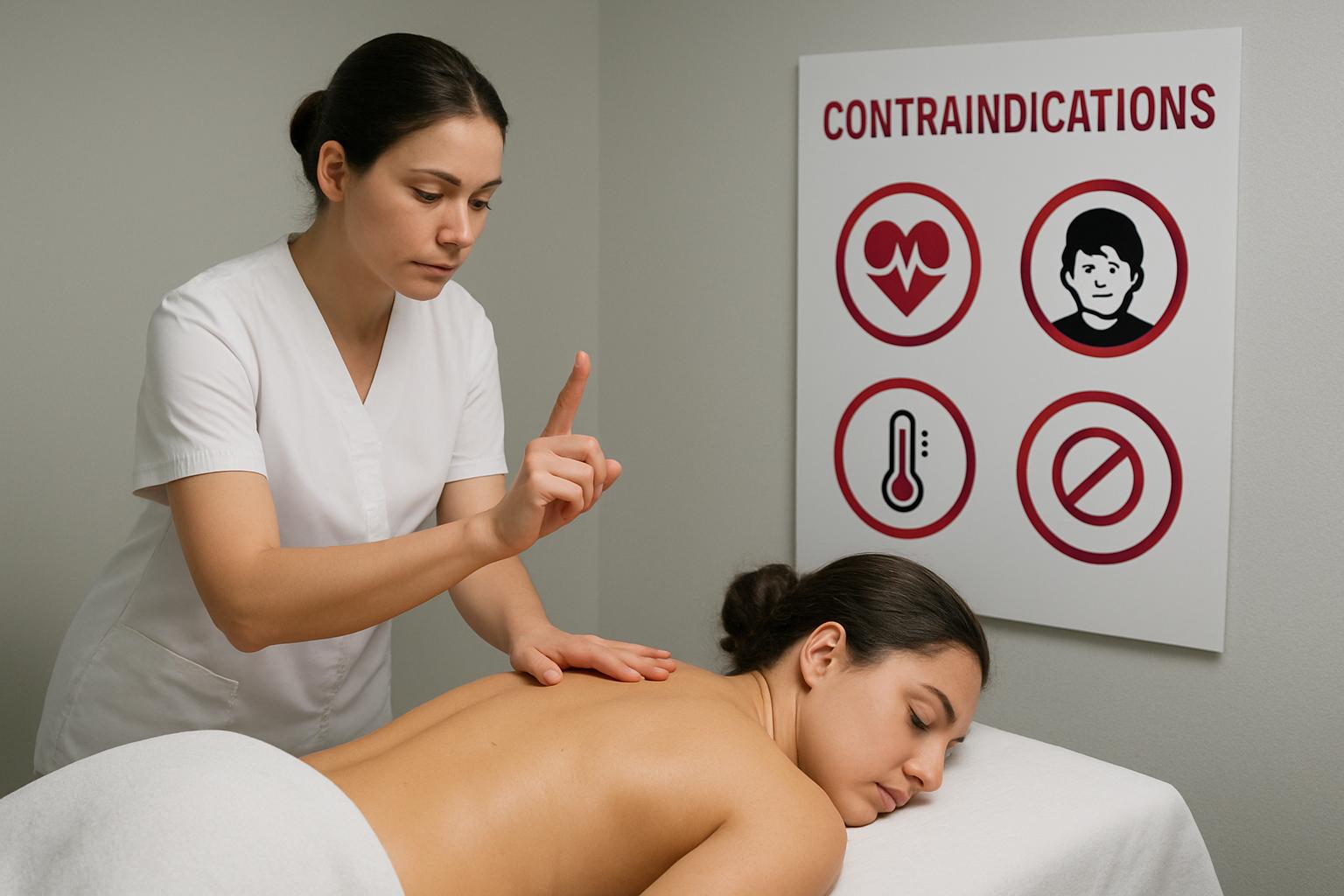
- Open wounds, rashes, or active infections
- Recent fractures or acute inflammation
- Sensitivity to heat or reduced skin sensation
- Uncontrolled chronic illnesses — consult your physician first
How Japanese Traditions Shape the Experience
Japan’s approach to bodywork tends to favor subtlety and integration. Treatments are often short on flashy theatrics and long on careful attention: modest rooms, clean lines, and a rhythm that matches breath and muscle release. Heat is not an add-on but a partner to touch. Whether it arrives in the form of a hot towel, a warmed hand, or a slab of stone, it is used to prepare tissue, focus attention, and help the body shift from guarded to receptive.
Cultural notes that matter
Respect and hygiene are central. Many therapists will ask about routine, sleep, and diet because these lifestyle details influence muscle tone and circulation. There’s also a practical ethic: if something feels too hot or the pressure is too strong, saying so is expected and will alter the session quickly.
Practical Comparison: Heat + Touch Options
| Method | Best for | Session feel | Duration |
|---|---|---|---|
| Shiatsu with warmed hands | Tension relief, energy balance | Intentional, finger pressure with warmth | 30–60 minutes |
| Hot-stone adaptation | Deep relaxation, whole-body warmth | Slow, enveloping, meditative | 60–90 minutes |
| Moxibustion (okyu) | Targeted warmth for specific points | Localized heat, focused | Short, repeated applications |
| Ganban’yoku / stone-slab | General detox-style relaxation | Laid-back, like a warm bed | 30–60 minutes |
When to Consider Professional Care
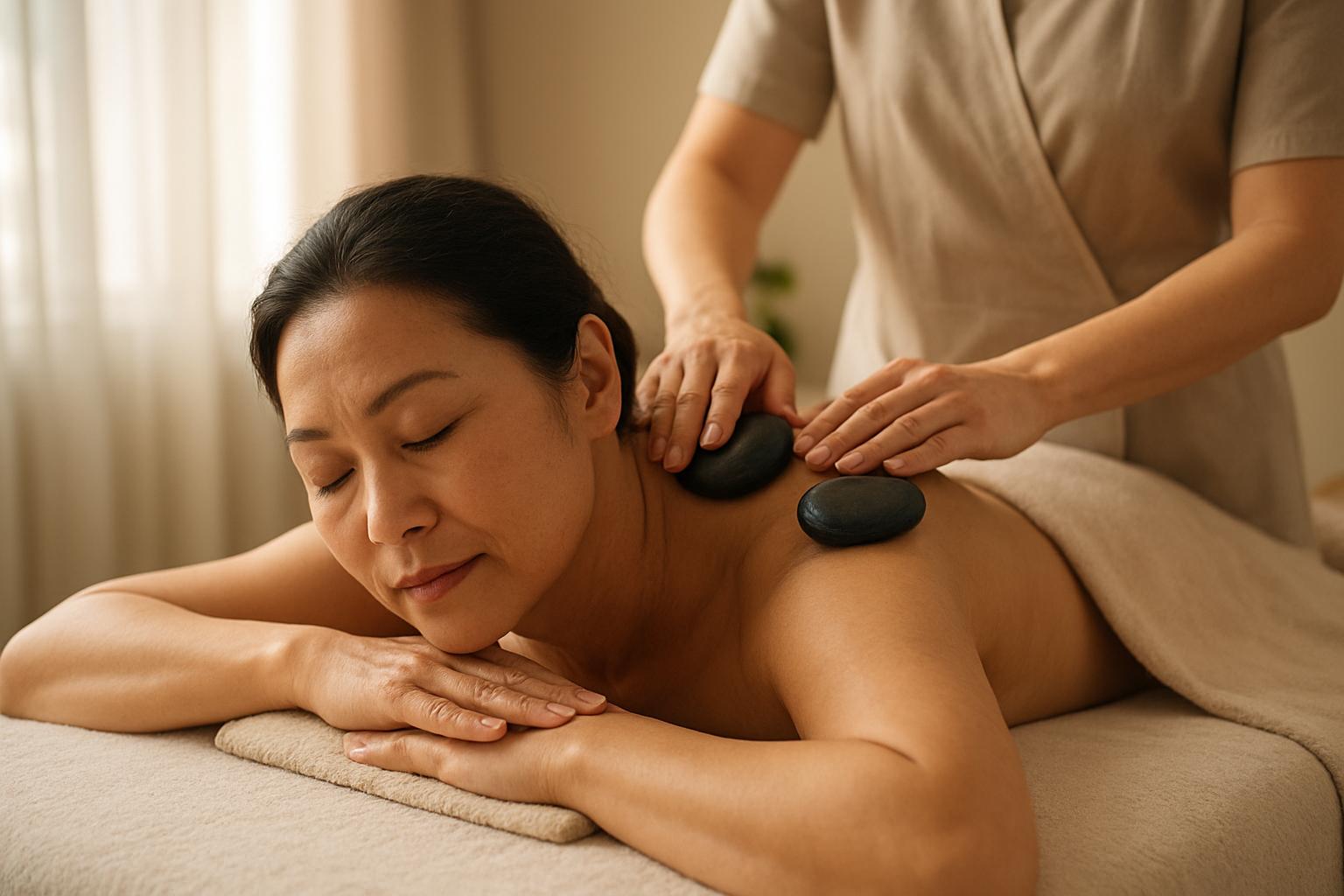
If pain is persistent, worsening, or accompanied by alarming symptoms (numbness, sudden weakness, swelling), see a healthcare professional before pursuing heat-based massage. For chronic musculoskeletal issues, a licensed therapist who coordinates with your doctor or physiotherapist can create a safe plan that uses heat strategically to support recovery.
Conclusion
Japanese massage hot practices marry the simple power of warmth with skilled touch to ease tension, encourage circulation, and create a calming space for the body to let go. Whether you seek a formal shiatsu session enhanced with heated towels, a gentle hot-stone treatment, or mindful at-home routines, the key is measured, attentive use of heat and a trained or informed approach to pressure. Tasteful, restrained, and effective, these methods offer a way to bring warmth into a busy life and remind the body that relaxation can be deliberate, restorative, and quietly powerful.