
When you start shopping for a massage, one phrase you’ll run into often is body to body massage price. It carries more questions than answers: how much should you expect to pay, what factors make the price climb, and how do you tell a fair rate from something too cheap or needlessly expensive? This article walks through those questions in plain language. My aim is to give you useful benchmarks and practical tips so you leave with confidence rather than confusion.
What Is a Body to Body Massage and Why Price Varies
The term “body to body massage” generally refers to a style of massage where the practitioner uses their hands, arms, and sometimes upper body in close contact with the client to provide pressure, glide, and warmth. This approach can be relaxing and tactile, and different studios treat it differently. That variability is the first reason prices vary. Some establishments include it as part of a standard menu; others treat it as a specialty service with a higher fee.
Beyond definitions, three broad categories influence cost: practitioner’s training and credentials, location and venue quality, and session length or intensity. A highly trained therapist in an upscale neighborhood will naturally command a higher body to body massage price than a newcomer operating from a smaller studio. Understanding those categories helps you separate reasonable pricing from outliers.
Primary Factors That Influence Body to Body Massage Price
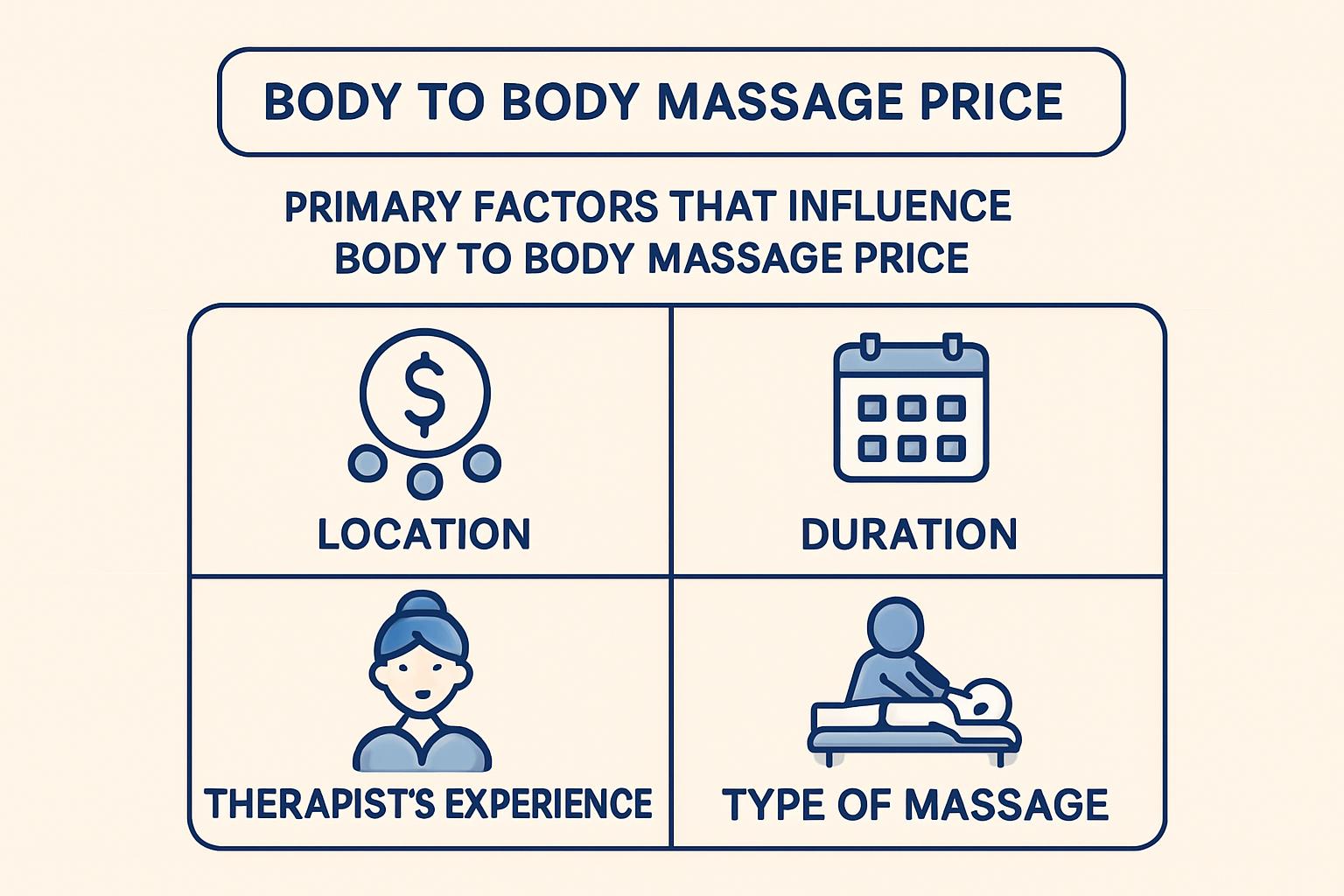
Here are the most common elements that push the price up or down. Each of these matters in its own way, and they’re more telling together than any single factor on its own.
- Training and experience: Certifications, years on the table, and specialty education add value.
- Location: Urban centers and tourist areas usually carry higher overhead costs.
- Length and type of session: A 30-minute quick session costs less than a 90-minute full treatment.
- Facility and extras: High-end spas with amenities like steam rooms and premium oils will include that in the price.
- Demand and availability: Popular practitioners can charge a premium; last-minute bookings sometimes cost more.
- Legal and regulatory environment: In areas where stricter rules apply, compliance costs can be reflected in pricing.
Typical Price Ranges by Session Length
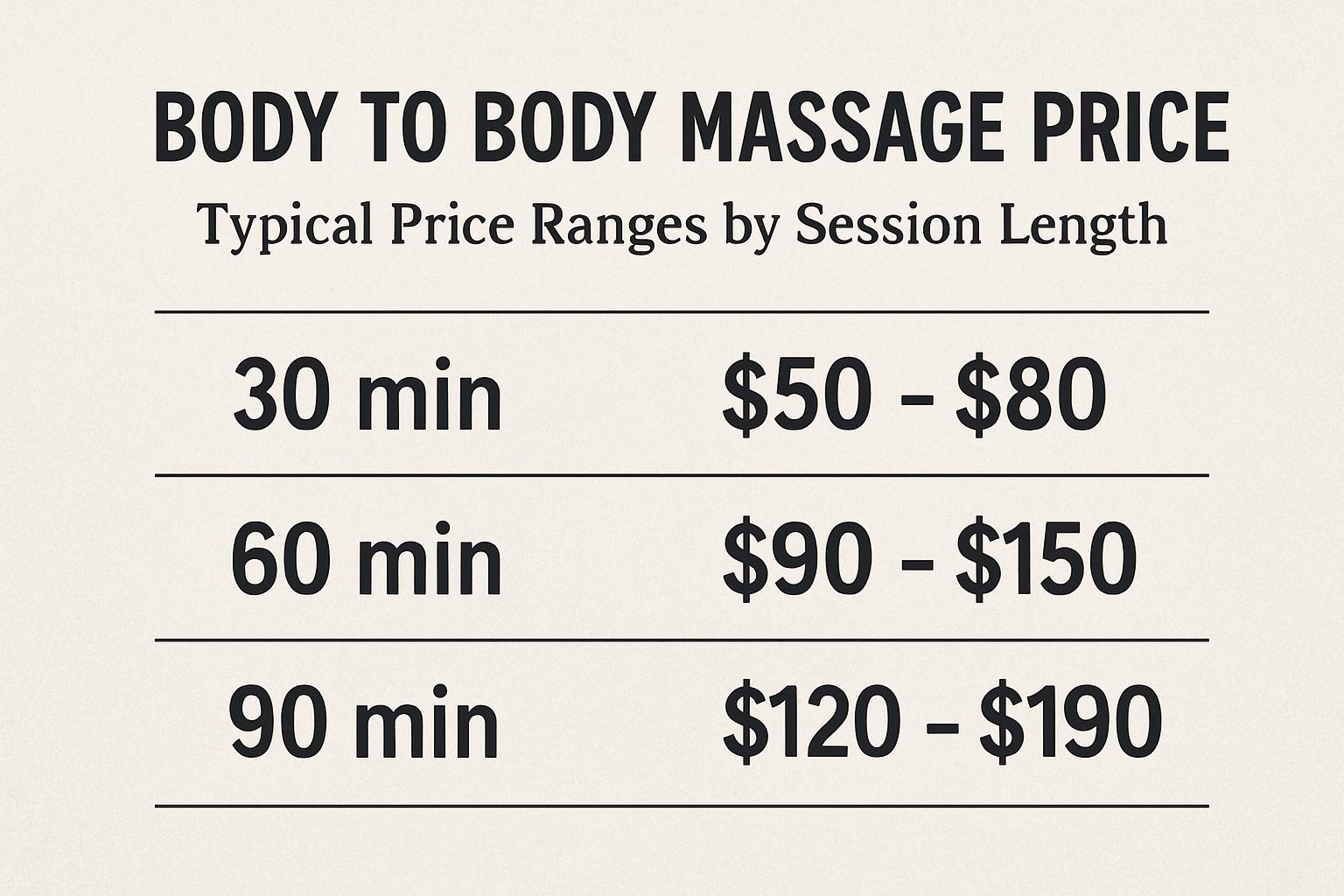
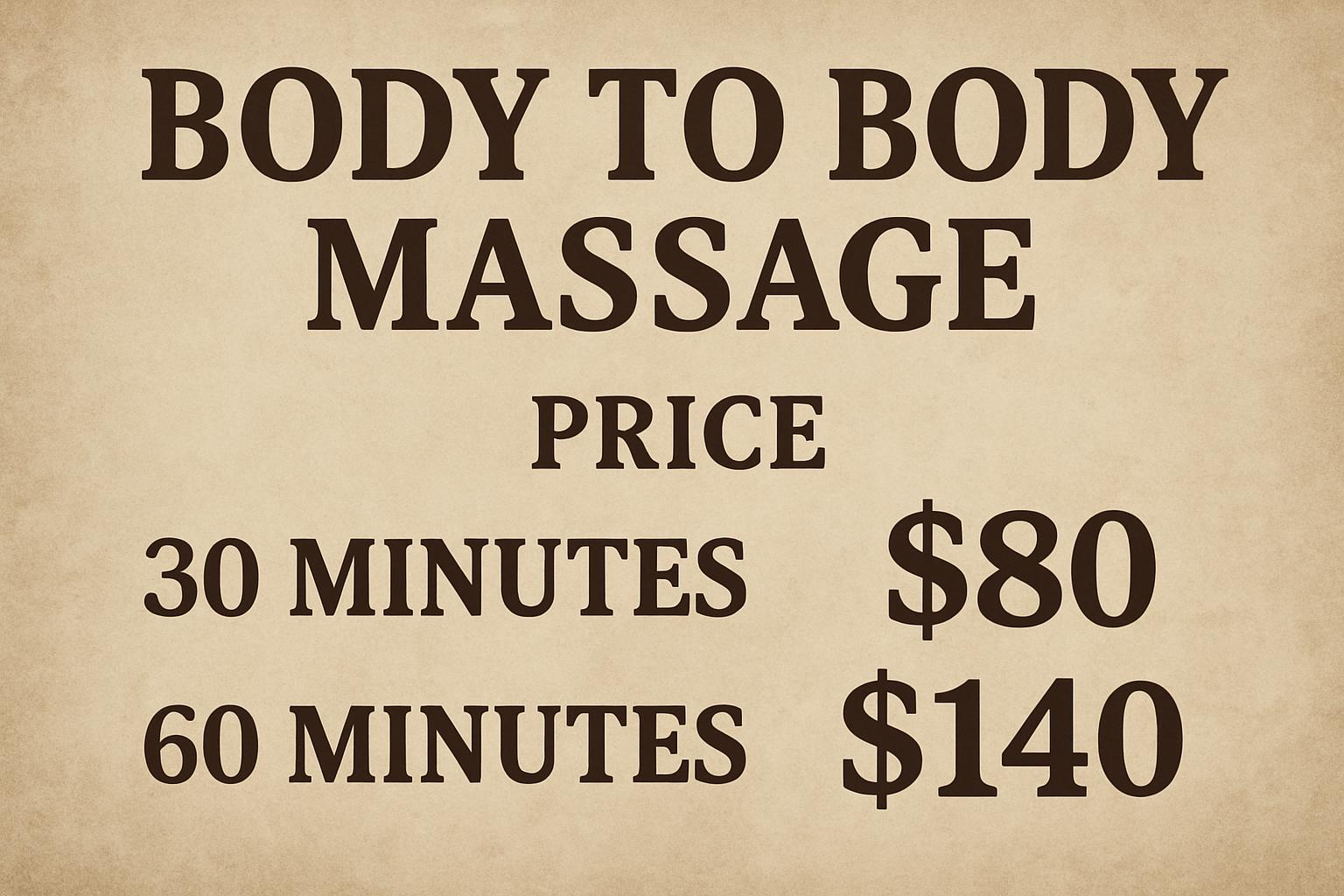
While prices vary by market, the table below provides a realistic range you can expect. These are general numbers meant to help you compare options, not guarantees.
| Session Length | Typical Price Range (USD) | What You Get |
|---|---|---|
| 30 minutes | $40 – $80 | Focused short treatment, often for one area or quick relaxation |
| 60 minutes | $70 – $150 | Standard full-session covering major areas of the body |
| 90 minutes | $110 – $220 | Extended session for deeper work and a slower pace |
| 120 minutes | $160 – $300+ | Comprehensive experience with time for consultation and extra care |
How to Judge Whether a Body to Body Massage Price Is Fair
Price alone doesn’t tell the whole story. A fair body to body massage price reflects transparent communication, clear boundaries, and professional standards. Before you book, look for these signals:
- Clear service descriptions: The spa or therapist should explain techniques and what is or isn’t included.
- Credentials listed: Licensed practitioners or known training institutions add credibility.
- Client reviews: Consistent reviews and testimonials help verify service quality.
- Transparent policies: Cancellation fees, refunds, and session procedures should be spelled out.
- Clean, welcoming environment: Photos and first impressions matter—sparse or poorly maintained spaces may indicate lower standards.
Questions to Ask Before Booking
Asking a few straightforward questions will save you time and avoid awkward misalignments. Try these before you commit:
- What techniques are included in the session?
- Is the practitioner licensed or certified, and what training do they have?
- Can you explain the refund and cancellation policy?
- Are there any additional fees (oils, towels, gratuity)?
- What should I wear, and how is client privacy handled?
Finding the Right Balance Between Price and Value
Value isn’t simply the lowest dollar amount. A modestly higher body to body massage price that gives you a trained therapist, safe boundaries, and a respectful environment is usually a better bet than the cheapest option. Consider value in three parts: safety, skill, and atmosphere. If one of those is missing, even a low cost can feel expensive after a poor experience.
If you’re budget-conscious, look for midweek specials, package deals, or community clinics that offer sliding-scale rates. Many therapists also offer shorter sessions that let you sample their style without paying for a full hour. Those options allow you to evaluate technique and comfort before committing to a longer or pricier appointment.
Red Flags to Watch For
Prices that are dramatically lower than market average can say more than they intend. Here are warning signs that a suspiciously low body to body massage price might conceal problems:
- No professional listing or license information available.
- Vague descriptions of what happens during the session.
- Pressure to add tips, extra services, or to book privately without receipts.
- Poor hygiene, lack of proper linens, or an unprofessional contact arrangement.
Regional Differences and Why They Matter
Location shapes price in predictable ways. Metropolitan areas with higher rents and operating costs will charge more. Tourist destinations often factor convenience into the price. Conversely, suburban and rural therapists may offer lower body to body massage price points but can still deliver excellent service. Don’t assume urban equals better; look at individual credentials and reviews instead.
Another regional factor is regulation. Some cities require licensing and specific facility standards, which can increase costs but also provide consumer protection. In areas with minimal regulation, you should do a little extra homework before trusting price alone.
How to Use Reviews and References
Online reviews give context to price. Look for patterns rather than one-off comments. Multiple mentions of professionalism, punctuality, and consistent technique are better indicators than single glowing or negative reviews. If possible, ask friends or local community groups for recommendations—personal referrals often lead to the most reliable experiences.
Practical Tips to Get the Best Experience for Your Budget
Here are practical ways to make sure your body to body massage price translates into a positive session:
- Book a short introductory session first to test technique and comfort.
- Ask for a clear treatment plan: what areas will be covered and why.
- Confirm all fees and gratuity practices before arriving.
- Look for therapists who offer packages if you want regular care—those usually lower the per-session cost.
- Avoid last-minute bookings if you want the best selection; popular therapists fill up fast and may charge premium rates.
Final practical checklist before you book
Use this compact checklist as you decide. It will help you match the body to body massage price to the service you actually want and avoid surprises.
- Verify credentials and training.
- Confirm session length and what it includes.
- Read several recent client reviews.
- Ask about cancellation and refund policies.
- Make sure the price quoted is final or understand any extra fees.
Conclusion
Body to body massage price depends on training, location, session length, and the quality of the facility—none of which should be sacrificed for a bargain. Look beyond a single number: check credentials, ask clear questions, read reviews, and use short sessions to evaluate a therapist’s style. With a little preparation, you’ll find a fair price that buys both a satisfying experience and peace of mind.